

Every day, thousands of dogs are diagnosed with kidney disease. The first suggestion most conventional veterinarians make is to switch from whatever the dog has been eating to a low-protein “kidney diet” food. Clients are sent home with bags or cans of “prescription” food and warned not to feed high-protein foods or treats of any kind.
Most dogs, even chow hounds, approach their new, low-protein food with suspicion, since these diets are generally much less palatable than foods that contain more animal protein. Many refuse to eat. Conventional veterinarians are used to this response and tell their clients to stick to the new food for their dogs’ own good. “Your old food is too high in protein and will actually speed kidney failure,” they warn. “Keep giving him the prescription food. He’ll come around when he gets hungry enough.”
Eventually most CRF patients do accept their new food, though without much gusto or enthusiasm. Worse, despite their food’s low protein levels, the dogs’ slow deterioration continues.
After their dogs have died, many owners look back and wonder whether they did the right thing. Now a new approach to feeding dogs with kidney disease offers a different scenario – one that’s more likely to keep CRF dogs, and their human companions, happy.
A paradigm shift
It’s a fact of life that not all medical discoveries and “breakthroughs” in disease treatment prove to be as promising as they seemed at first. Adopted on the basis of a few small, encouraging studies, some strategies are found later to cause mixed or even adverse results.
This is definitely the case with the currently predominant treatment strategy of giving dogs with CRF a low-protein diet. Newer research has radically changed and fine-tuned the dietary recommendations for canine CRF patients. Those using the latest recommendations to feed their CRF dogs a therapeutic home-prepared diet report excellent results. Best of all, most dogs love the combination of high-quality protein and freshly prepared ingredients.
About CRF
Chronic renal failure affects male and female dogs of all breeds and all ages. Its underlying cause may be hereditary or related to inflammation, tick disease, progressive degeneration, damage following acute renal failure, or unknown causes. Acute renal failure may be triggered by a trauma injury, exposure to poisons like antifreeze or rat poison, or damage caused by medications, bacterial infections (such as leptospirosis), fungal infections, or dehydration.
Many animals born with poorly constructed or poorly functioning kidneys succumb to kidney failure at a young age. Most cases of chronic renal failure are seen in dogs age seven or older. Chronic nephritis, a common diagnosis in CRF patients, involves low-grade, long-term inflammation of kidney tissue that causes permanent damage to delicate renal tissue.
The protein debate
As soon as they diagnose kidney disease, most American veterinarians prescribe a low-protein diet. They believe that protein harms the kidneys and that reducing protein consumption slows the progress of kidney degeneration. This is because early research on rats was assumed to be true for dogs, and excess protein causes problems for rats. A number of pet food manufacturers sell low-protein prescription diets for dogs with chronic renal failure, and those who prepare their own food at home are warned against feeding meat, poultry, and other foods that are high in protein.
“Those recommendations are based on a myth,” says Wendy Volhard, author of Holistic Guide for a Healthy Dog. “In fact, the whole theory of low-protein diets for dogs with kidney disease was blown apart in 1975 by David Kronfeld, PhD, who was at the time a veterinary researcher at the University of Pennsylvania. His concept was not to feed less protein but rather to feed higher-quality protein.
“The low-protein myth is like an old-wive’s tale, something based on ignorance that just won’t die. Yes, inferior-quality protein can harm a dog’s kidneys, but the solution isn’t to continue with inferior-quality ingredients and feed less of them. The solution is to improve the quality of ingredients and in that way provide what the dog needs for good health.”
Studies disproving the prevalent low-protein prescription have been widely published in veterinary journals and textbooks. But it is moving into the mainstream very slowly.
“Most vets who did not graduate from college in the last few years (and some of those as well) are still unaware of or dismiss the newer studies that show low-protein diets neither slow the progression of kidney disease nor prolong life,” says Mary Straus, a lifetime dog lover from the San Francisco Bay area who researches health and nutrition issues.
“Too many dogs are forced to eat Prescription Diet k/d® or similar low-protein prescription foods,” says Straus. “These can actually cause harm. When protein levels are very low, the body will cannibalize itself to get the protein it needs. This creates more waste products than if you feed the proper amount of high-quality protein in the first place. Also, k/d is not very palatable, and many dogs with kidney disease will eat only enough of it to survive, or stop eating entirely if that is all they are offered.”
Older dogs actually require a higher level of protein to maintain their body stores of protein than do younger adult dogs, says veterinary nutritionist Patricia Schenck, DVM, PhD, of Michigan State University’s Center for Veterinary Medicine. In an article published in Veterinary Nutritionist, Dr. Schenck wrote, “Reducing dietary protein in older pets may have adverse effects. As pets age, their ability to utilize nutrients decreases. The only time dietary protein restriction is appropriate in renal failure is when the disease has become severe.”
Healthy geriatric dogs require about 50 percent more protein than young adults, say canine health writers Susan Thorpe-Vargas, PhD, and John C. Cargill, MA. Depending on the quality of the protein, they say, it should make up 20 to 30 percent of total calories ingested. “Protein restriction can result in impaired wound healing, diminished immune function, and lowered enzyme activities and cellular turnover. Dogs with impaired renal function do better with dietary phosphorus restrictions.”
A new action plan
Mary Straus’s dog Nattie was a healthy, athletic Chinese Shar-Pei who had no trouble keeping up with young dogs even at 10 and 11 years of age. She ate kibble and received annual vaccinations until 1997, when Straus learned about the health benefits of raw diets and the harm that can be caused by repeated vaccinations. Nattie was 10 years old when she was converted to a raw diet and stopped receiving vaccinations. Four years later, at age 14, Nattie was diagnosed with kidney disease. After much research, Straus put the newest diet plan into place for Nattie.
“I modified her diet to reduce its phosphorus but kept her protein levels high,” says Straus. “Her diet was around 37 percent protein on a dry matter basis, and she thrived. Her kidney numbers actually improved for two years, and when she died at age 16, her illness had nothing to do with kidney disease.
“People need to know this information, as well as how to formulate a homemade diet or what foods to add if they are going to feed k/d or one of the other low-protein commercial diets for kidney disease.”
Dietary goals
When developing a diet for dogs with kidney failure, the recommendations from leading experts are to feed:
- Moderate to high amounts of fat
- Moderate amounts of high-quality protein
- Low amounts of phosphorus
- Moderate amounts of low-phosphorus carbohydrates
- Plenty of water, juices, broth, and other liquids
Although guidelines vary, a sensible goal is a diet whose total calories come 1/3 from fat, 1/3 from protein, and 1/3 from carbohydrates.
Fat provides calories and energy, and most dogs have an easy time digesting it. Good sources of saturated fat include fatty meats, butter, whole-milk yogurt, egg yolks, and coconut oil.
Polyunsaturated vegetable oils, such as canola, corn, soy, safflower, sunflower, and flax seed oil, are not recommended for CRF patients. Neither is cod liver oil, because of its high vitamin D content, which failing kidneys have difficulty processing. But fish oil (fish body oil, not fish liver oil) has been shown to help dogs with CRF.
When adding fats and oils to the home-prepared diet, start with small amounts and increase quantities gradually. Too much too soon can lead to diarrhea. Dogs prone to pancreatitis should be carefully monitored.
What are the best sources of protein? Most experts consider eggs to contain the highest-quality protein, but their yolks contain moderate amounts of phosphorous. One strategy for feeding eggs to CRF dogs is to feed one or two egg whites for every whole egg. Calcium is a phosphorus binder, so add small amounts of finely ground eggshell to each meal (½ teaspoon per pound of food) to help reduce the amount of phosphorus absorbed by the body.
Other foods high in phosphorous include bones, fish with bones, cheese, and organ meats. “Bones are so high in phosphorus,” says Straus. “that I would avoid them or feed them in small amounts, such as one-third the normal quantity, even with early stage CRF. Like egg yolks, organ meats such as kidney and liver contain many nutrients that are important for canine health and should be included, but in moderate amounts.”
Feeding a low-phosphorus diet has been shown to benefit dogs with kidney disease. Bones are very high in phosphorus and should be eliminated or fed in very small amounts. When formulating a diet for a CRF patient, never add bone meal, but instead use a calcium source that does not include phosphorus, such as ground eggshells or calcium carbonate.
Other foods high in phosphorus include dairy products (especially cheese), fish with bones, organ meats, and egg yolks. These are nutritionally dense foods, so they should not be eliminated from the diet. Instead, feed them in reduced amounts in combination with low-phosphorus grains and vegetables. Low-fat meat is higher in phosphorus than fatty cuts, so unless your dog has a problem with fat, feed higher-fat meats and whole-milk dairy. Always add calcium, which acts as a phosphorus binder, to all meals. You can use ½ teaspoon ground eggshell, or around 1 gram (1,000 mg) calcium, per pound of food.
On her DogAware website, Mary Straus lists recommended phosphorus levels for dogs of different weights in different stages of kidney disease along with nutritional information, including calories and phosphorus levels, of dozens of common foods. To help caregivers plan their dogs’ menus around phosphorus levels while providing enough calories to prevent weight loss, a common problem in CRF dogs, Straus color-codes these foods.
■ Code Red: Feed in small amounts. These include low-fat meats such as ground turkey, lean ground beef, or skinless chicken breast; organ meats, such as beef heart, chicken liver, beef liver, or beef kidney; canned fish, such as jack mackerel, pink salmon, or sardines in tomato sauce or water (not oil); high-phosphorus grains such as oatmeal; dairy products such as cottage cheese, whole-milk yogurt, whole-milk mozzarella cheese, cheddar cheese, or whole eggs and egg yolks. Raw meaty bones, including chicken parts (backs, necks, wings, and legs) and turkey necks should be fed in limited amounts, if at all.
■ Code Blue: Feed in moderate amounts. Higher-fat meats such as dark-meat chicken and skin, 20-percent-fat ground beef, pork, lamb, and liverwurst; green tripe; winter squash such as acorn or butternut; and whole grains such as brown rice, millet, and whole-wheat bread.
■ Code Green: Okay to feed in large amounts. Egg whites, yams or sweet potatoes, white potatoes, cereals such as Cream of Wheat, Cream of Rice, or Malt-o-Meal, glutinous (sticky) rice, white rice, barley, and white bread. Grains should be cooked, and boiling vegetables may reduce their phosphorus levels.
Further diet tips
Recently, green tripe, a food traditionally fed in Europe, has become a staple for many American dogs, including CRF patients. Green tripe is the raw, unprocessed stomachs of cud-chewing animals like cows, goats, or sheep. Supermarket tripe is white because it has been bleached and deodorized, which destroys fragile nutrients. Green tripe contains easily digestible protein, beneficial bacteria, abundant enzymes, and relatively low phosphorus levels.
Tripe smells awful to humans but sublime to dogs, including CRF patients who have otherwise lost interest in food. Thanks to increasing demand, frozen green tripe is available from mail order sources and some local distributors of raw frozen foods.
If you choose to feed a prescription dry or canned food rather than a home-prepared diet, add fresh protein foods, either raw or cooked, such as meat, eggs, egg whites, and tripe, especially in the early stages of the disease.
If you feed a diet based on raw meaty bones, substantially reduce the amount of bone. If the diet calls for bone meal, like the Natural Diet developed by Wendy Volhard, follow her advice to switch from lean to fatty meats and substitute calcium carbonate for the bone meal to reduce phosphorus levels.
While dogs are not designed to consume grains or starchy vegetables, most CRF diets include up to 50 percent carbohydrates in order to provide calories and nutrients while keeping phosphorus levels low. Steaming or boiling vegetables reduces phosphorus levels if you discard the cooking water. Alternatively, puree or juice them to improve assimilation. Note, however, that dogs with arthritis may be sensitive to nightshade plants, which include white potatoes, peppers, eggplant, and tomatoes.
Whole wheat, oatmeal, brown rice, millet, and other whole grains are moderately high in phosphorus and should not be fed often or in large amounts. White rice is low in phosphorus, and glutinous or sticky rice is the lowest-phosphorus grain. To help make grains more digestible (as described in “It’s All in How You Make It,” WDJ March 2001), soak them overnight to remove enzyme-suppressors and naturally occurring toxins.
“I have had good luck with Malt-o-Meal, which is low in phosphorus,” says Straus. “You have to be careful about feeding vegetables to dogs with kidney disease. I recommend using white potatoes and yams because they provide a lot of calories without adding much phosphorus, unlike many of the low-cal veggies.”
Dogs with high blood pressure, which can be related to kidney disease, may need reduced salt in their food. Home-prepared diets are naturally low in salt, but cottage cheese is high in salt, canned fish can be rinsed to remove salt, and processed foods should be checked for their sodium content.
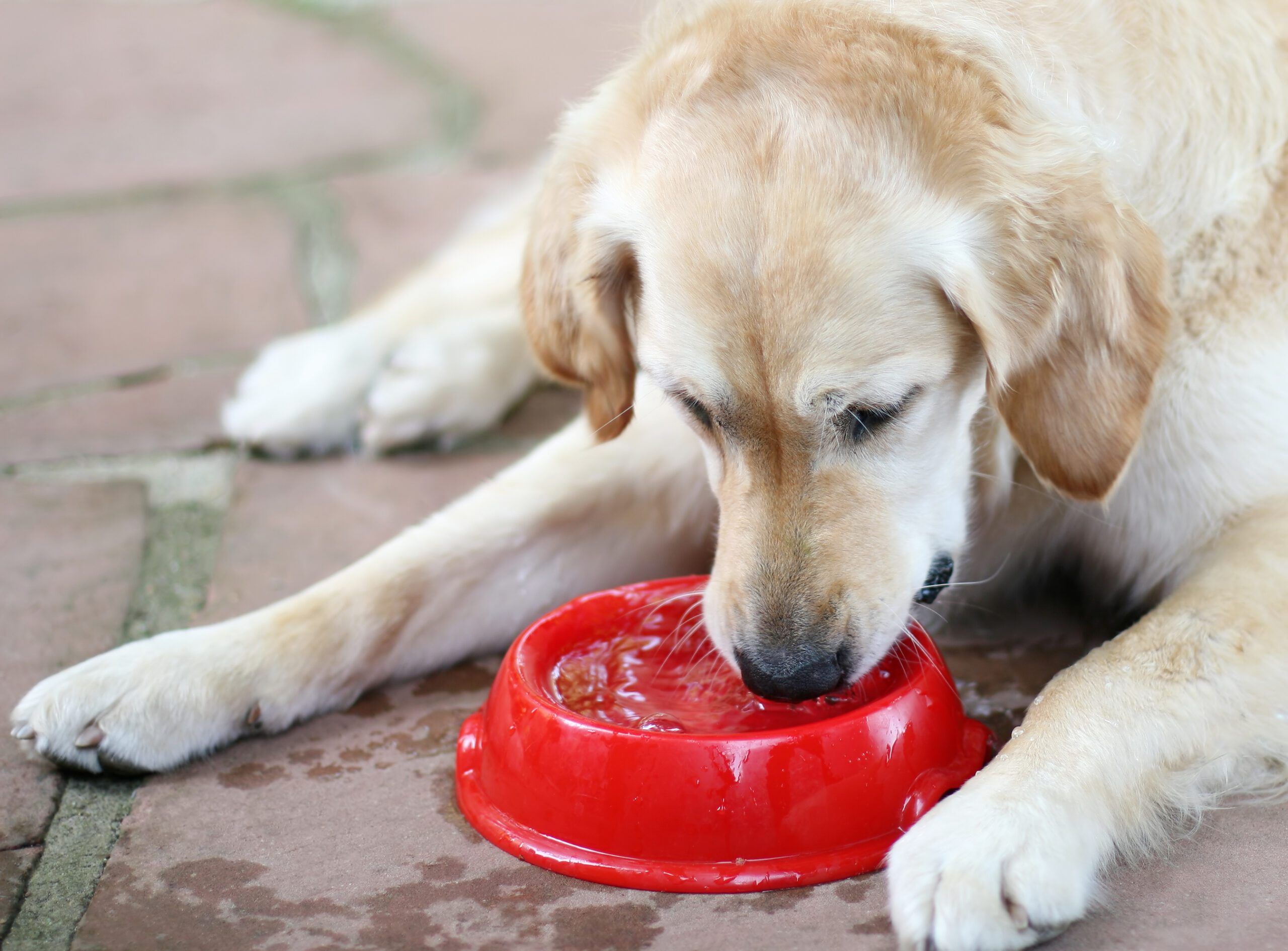
Because dehydration creates serious problems for dogs with kidney disease, it’s important to provide abundant water. “Make sure fresh water is always available,” suggests Straus, “even if excess drinking causes your dog to become incontinent. If your dog already drinks a lot of water, ask your vet about giving subcutaneous fluids to help the dog stay hydrated.” Hard water contains minerals that are best avoided, so use filtered or low-mineral bottled water.
Dogs with kidney disease can lose interest in food, so look for foods and flavors that can revitalize a flagging appetite. “It’s important for these dogs to eat something,” says Straus, “even if it’s not one of the recommended foods. Try offering your dog’s food at different temperatures, experiment with raw versus cooked, and offer multiple small meals rather than just one or two large ones. My Nattie wouldn’t eat raw eggs, but she loved eggs scrambled with a bit of cheese. The cheese wasn’t the best thing for her, but it got her to eat.”
Green tripe can be added to food as a flavor enhancer, as can Seacure, a very fishy-smelling powder sold as a protein supplement. “If you feed a commercial food like k/d and your dog won’t eat it, find something else, preferably a homemade diet that provides high-quality protein while controlling the amount of phosphorus,” she says.
Plus, she adds, most dogs love fresh food. “The higher moisture levels in fresh foods help protect their kidneys, and they feel better and enjoy life more.”
Coenzyme Q10. In a recent human study, kidney disease patients improved on a dose of 60 mg CoQ10 three times daily. Adjust this for your dog’s weight by using 15 mg per 25 pounds of body weight, three times daily.
Vitamin E, 50 IU daily per 25 pounds of body weight. Also give vitamin B-complex and moderate amounts of vitamin C, around 500 mg for a 50-pound dog. Avoid multivitamin/mineral products that contain phosphorus or vitamin D. Buffered or ascorbate forms of vitamin C may be easier on the stomach.
Glandular supplements that support the kidneys are often recommended by holistic veterinarians. Canine Renal Support from Standard Process is available from veterinarians, licensed health care practitioners, and some online sources.
Herbal supplements. Traditional kidney tonics include dandelion leaf and root, couch grass, and marshmallow. Look for teas and tinctures that contain these and other gentle, supportive ingredients, or consult Herbs for Pets, by Mary Wulff-Tilford and Gregory Tilford (BowTie Press).
Also With This Article Click here to view “Can Meat Cause Kidney Failure”
Click here to view “Chronic Kidney Disease in Dogs”



A couple things I forgot to mention which are important. I add water to each meal. I also add Slippery Elm to aid in the digestion of the Chitosan which otherwise can plug up your pet. I give water at least 2x daily with a little tripe mixed in it to encourage drinking. At that time I also give the Chinese herb blend called Rehmannia 8 by Health Concerns. He gets 1 capsule each time he gets the water mixed with a bit of raw green tripe. Digestive enzymes are good if you can do them, also a probiotic for dogs. I was giving one raw cod liver oil per day for vitamin D at 42 IU since I wasn’t doing eggs or fish but I now want to research again whether the amount is safe just to be sure.
This is a very good article! I’d like to also share my experience. My dog was poisoned a year and a half ago. When I finally realized he didn’t have food poisoning, he was seen by a vet who diagnosed him with acute KF. The vet kept him overnight and recommended I put him down. I resisted and put him on kidney and liver cleansing herbs for a number of days. He hated the treatment which included hot pepper! I refused the KD (the cans are lined with BPA!) and the food is garbage. I read about the green tripe and mixed it with water to skip the subcutaneous water which was torture for both of us. I did some research and fed him ground beef, green tripe, purple cabbage, baby carrots, and apple. Also very small amounts of beef heart, kidney, and liver. All raw! I weigh all meats in grams. He got 10g beef heart, 5 g liver and 5 g kidney. 140 g ground beef and 140 g raw green tripe. Meals are divided into 2 portions which is easier on the kidneys. I chose those amounts in accordance with the stage he appeared to be in. My dog also got/gets barley grass and alfalfa powders, ashwaganda, astragalus, burdock, kelp, taurine, dandelion, nettle, spirulina,kale, and chitosan and eggshellent calcium. The Chitosan and ground eggshell reportedly bind phosphorus. No synthetic vitamins except zinc and natural vitamin E. Oh also 4 mg astaxanthin with the wild salmon oil. For nausea the first few weeks CBD oil. Well, my dog was doing really well about 4 months later and off the CBD for nausea until he started having mouth tremors and high blood pressure (half closing one eye). Excellent energy though and good appetite. I was worried about the tremors and blood pressure and prayed for wisdom. Within a couple of days I received an article in my email about Modified Citrus Pectin called Pectasol C created by Dr Isaac Eliaz. In my research I found the MCP binds to Galectin-3 which is an inflammatory protein that is implicated in KD as well as many other serious conditions. The doctor mentioned in an interview that the MCP at its lower molecular weight and esterification gets in the cells and hinders fibrosis. Unheard of and I had nothing to lose! I put Popo on an adult therapeutic dose of 6 capsules 3x/day and within 3 days I saw improvement! No more mouth tremors, eye not closing.Affect even more energetic! Super appetite! So after 3 months on the MCP I marched Popo to the vet who wanted to euthanize him. He ran all the blood and urine labs, and everything came back mid range normal!! My vet said he had never seen this before!! So yes, home diets do work. The MCP was and is the game changer along with real food. Try the MCP but don’t be lured by anything other than the Pectasol C. Other brands are cheaper but don’t have a low enough molecular weight. Nothing short of miraculous here. Popo is still my kidney patient. I had lowered his capsules to twice daily ( did I mention I give it with syringed water -about 1 cup or so each time he gets the 6 capsules. He started going downhill again when our forest fires made our air absolutely toxic last summer, soI then increased the dose again to 3x a day until the air cleared to a healthy level. He perked right up again. Anyway, I still have my Popo who’s doing well 1.5 years later. So blessed to still have him! I understand the distress and heartache but don’t give up! There is hope! Good luck and blessings!
I am so happy I came across your article. I have a 14 year old monitored poodle that is my everything and she was not eating and not feeling her peppy self so took her to the vet and they took blood and like other comments her kidney levels were elevated. She previously was diagnosed with pancreatitis and I was told to give her the low fat gastrointestinal food and she really didn’t like at all. So back to her kidney issues. Well like all the other comments they prescribed, yes you’ve guessed it hills science diet Kidney care well I started with the Canned which I thought she might like the stew one and she ate a tad bit and then stuck he nose up. I literally had to hand feed her and she did not eat much at all. So I then tried the dry variety and it smelled awful and she only ate a small portion and they were like Little Rock’s not appetizing to her at all so sad she would not eat I tried to hand feed her and no go.
She had fluid treatments twice a week and she looks so sad but once she had the treatment she seems peppier. So I said f this I ordered a rice cooker and cooked organic white rice and boiled chicken green wise chicken strips and oh boy the first time I gave her this she gobbled all up. I give her three meals of their a day and apple 🍎 slices and baby carrots and she is so much better and gained a lb whereas she lost one at the beginning of the week so now she is up to 15 lbs.
I don’t know why the vet pushes the prescription diet foods maybe they get commission hate to say that but it’s just to easy to say put her on this prescription diet.
My only thing is my little fur baby trembles and. Not sure what that is all about and it’s only periodically. She is a fighter for sure. Also she had not had any diarrhea and her pee came back with no issues and nothing wrong with her poo test.
I am not sure what other minerals she needs apart from the organic white rice and the boiled chicken and apple and baby carrots.
Thanks again and I’m glad that I found this forum.
I have been feeding my dog raw diet (primal) since I got her at the age of 3. She was diagnosed with stage 2 kidney failure and my holistic vet said to switch to My Perfect pet Low Phosphorus diet. Should I do that or should I continue with what I was feeding him?
My dog is 14.5 years old and she is at stage 2 or possibly 3 now of her kidney disease. Her creatine, BUN and phosphorus values are high and have been for quite a few months now. Last month she started to refuse to eat even though she was following us around imploring us to feed her, but would turn her nose up at everything including strips of fresh chicken breast/fish/her favourite treats. We were desperate and checked her into an emergency hospital where they were able to give her 48 hours of continuous IV fluid in hopes of flushing out her system and restoring her appetite level. When she returned home, she slowly became disinterested in eating again at which point my primary vet suggested I consider a feeding tube. Given her age, the level of care required and potential discomfort for my dog – I opted not to have one installed (she’s the type of dog who would freeze in place if a harness or any type of foreign object is placed on her so a feeding tube would mean a prison sentence for her in terms of movement). Finally, out of desperation, we decided to put all her food into a food processor and created a smooth gravy like consistency of liquid (similar to what one would do for putting into a feeding tube) except we used a thin syringe to feed her orally. She was extremely receptive to this type of feeding and would patiently wait for me to finish slowly syringe feeding her before swallowing. This isn’t for every dog and I am so grateful she did not fight me on this. Now her energy level is way way higher than before. It is by no means a cure for her kidney disease but it at least gives her the caloric intake she needs to sustain her current weight and bypasses the struggle of making her want to eat on her own. We were given a calculation by our vet of the amount of calories she needs in a day and prepared her food to reflect that, but we made it into a smooth gravy instead. She has since gained weight and is no longer skin and bones. We feed her three meals a day to ensure she is getting the energy she needs throughout the day and it also helps ensure she gets more liquid as well. This is what works for us, as I know firsthand how frustrating and heartbreaking it is to watch her waste away.
God bless you my friend – I feel your pain. Raw green tripe (the stinky none can green tripe) got my boy eating normal again, after all the above. Keep the dish raw even if you’re adding veggies. Use safe antacid it really helps . I’m using a liquid aluminum hydroxide antacid binder. Plus he’s eating all his proteins again, egg, cottage cheese, greek yogurt, chicken thighs- cooked.
I’m just reading ur article and others furparents issues and I’m feeling helpless.
My puppy just turn 8 months and she breaks my heart everytime I look at her. She is a German Shepherd and was the runt of her 10 puppy litter (not sure if that matters)
I purchased her from a first time breeder and feel in love at first sight . When Zola turned 7 months she weighed 72lbs now at 8 months she is 60.5lbs . She was diagnosed with kidney failure. After multiple blood tests, IV flush fluids antibiotics and over night stays, the animal hospital suggested the hills low protein food . I feel like deteriorating infront of me and I can’t help her. Plz can u help me help her!
Hi Mary, recently I found out my 14 year old shih-tzu has stage 3 kidney disease. It’s been tough and of course, my vet recommended the k/d diet. To my surprise, my pup liked it for a day or so. She is a picky one. Now, she’ll barely eat and I’ll have to constantly push her bowl towards her to get some food in her. She eats enough just to survive, but it hurts me knowing she isn’t eating enough. She normally has a great appetite too. She has a high BUN, so her vet recommended to stay away from protein. Any tips on feeding my picky eater?
Lyn, it’s impossible for me to offer advice without seeing actual test results (Stage 3 is way too general to be useful). You can contact me via my website if you need more input. Generally, you can read about possible contributing factors to inappetence here (note that gastrointestinal bleeding can contribute to high BUN, especially if BUN is relatively higher than creatinine):
http://dogaware.com/health/kidneymedical.html#acidosis
You can also get recipes from Balance IT (veterinary recipes require your vet’s approval, but they make that easy to get). I can’t offer any advice about which type of diet is needed without more info, but you should choose recipes that use their heatable Canine K Plus (not their original Canine K) for dogs with kidney disease
https://secure.balanceit.com/tools/ez2/
Any suggestions for a 14-yer-old lhasa apso who has been on Hills k/d for three years to kidney failure but has now developed pancreatitis? What do we feed him?
Linday, you need to stop feeding k/d immediately, as it is way too high in fat for a dog prone to pancreatitis (in fact, it likely led to his developing pancreatitis).
I can’t offer any dietary guidance regarding kidney issues without seeing test results (send them to me via email from my website if you want further input). You can also see some general guidance here:
http://dogaware.com/health/kidney.html
I have information on pancreatitis here:
http://dogaware.com/articles/wdjpancreatitis.html
http://dogaware.com/articles/wdjlowfatdiets.html