As with human acne, dog acne is an inflammation of the skin of the face. Or, more specifically in the case of your dog, the skin around the lips, chin, and muzzle. Most cases occur in shorthaired dogs such as Great Danes, Weimaraners, and German Shorthaired Pointers.
What you will see are red bumps, pimples or pustules, and reddened skin in those areas. You may also see hair loss. It looks a lot like a moist eczema.
What Causes Dog Acne?
Dog acne is most often associated with a trauma of some sort that breaks off hairs, leading the follicles open to infection and/or inflammation. It is often as simple as your dog rubbing his face with his paws or perhaps on a carpet, resulting in dog acne on the chin.
Allergies cause many dogs to scratch their chin or rub it vigorously on rugs and furniture. An overgrowth of demodectic mites can cause out-of-control itching and rubbing.
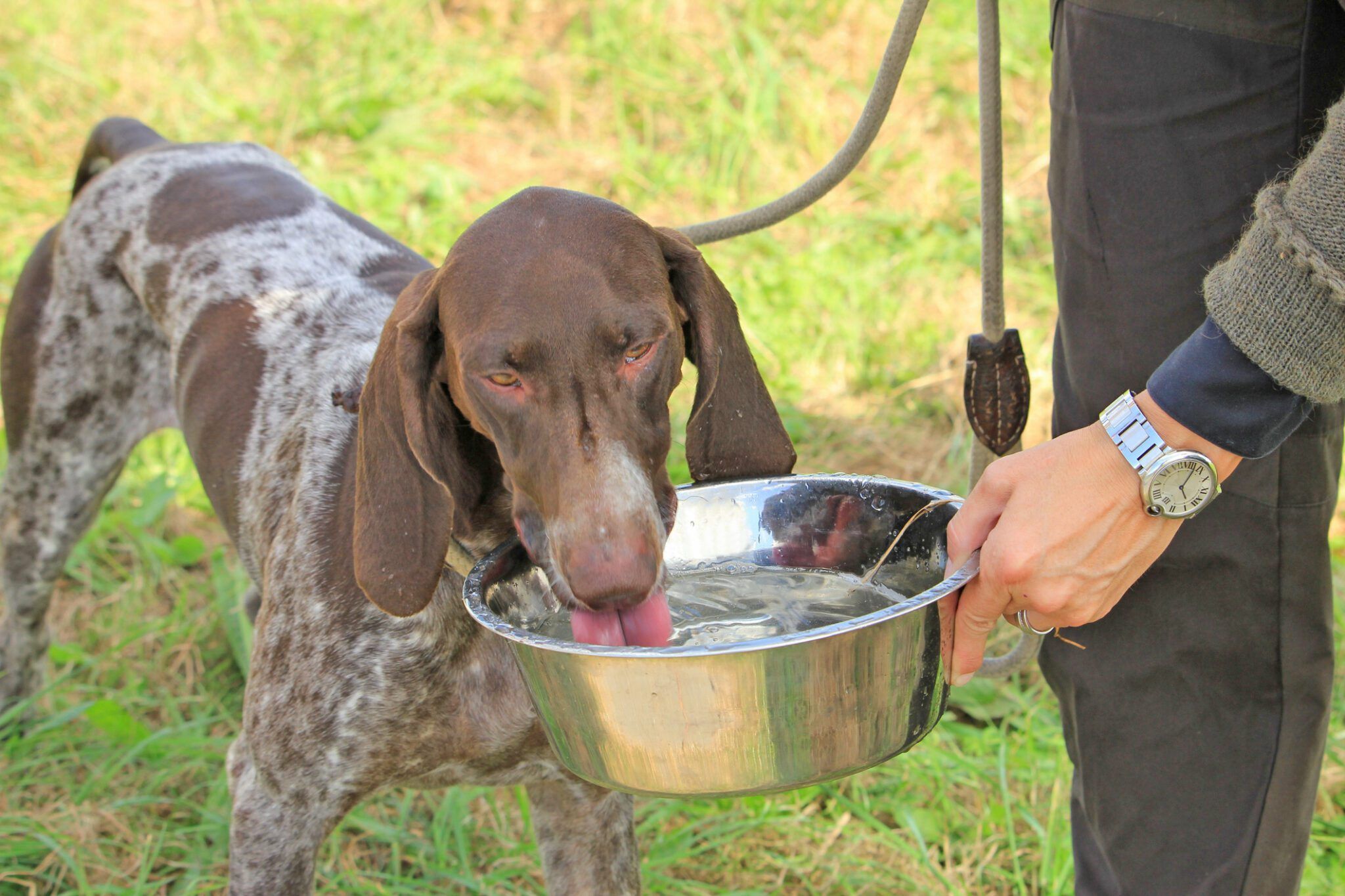
Some dogs react to rubber or plastic food and water bowls and end up with acne on their chins and lips.
How to Treatment Dog Acne
Your veterinarian may do some cytology (touching a slide to the inflamed area and then examining it under the microscope) looking for bacteria, fungal infestation, or mites. Finding anything on the cytology can help to guide treatment.
Dog acne treatment stars the same as with any “wet” skin condition: You want to use a drying agent. Benzoyl peroxide is often the foundation of canine acne treatment. Gentle cleaning (do not pop pimples or pustules!) may be all your dog needs for a mild case. Dry the area after washing. A topical antibiotic ointment or oral antibiotics may be prescribed if there is strong evidence for a bacterial infection or if cleaning alone does not clear up the acne.
Medicated foot powder can be gently and carefully applied to the chin since it is antibacterial, antifungal, anti-itch, and anti-inflammatory. You need to be careful to keep any powder from getting into your dog’s eyes. The powder tends to taste bad, but even so, distract your dog for a couple of minutes after you apply it to keep him from licking it all right off. Note: Do not use human acne medications on your dog!
How to Get Rid of Dog Acne
Prevention is key when it comes to dog acne. If your dog has rubber or plastic bowls, switch over to ceramic or stainless steel. They’re easier to properly clean anyway, so it’s a smart switch even if the acne is not a reaction to the dishes.
If your dog is a sloppy eater, try to clean and dry his muzzle after eating. Dogs with beards such as Schnauzers tend to have food and debris around their muzzles that can lead to acne.
If your dog has generalized skin allergies or skin inflammation, treating that primary disease should help to clear up the acne.
Puppy Acne
Puppy acne is a Staph infection seen in the groin area of some puppies. As with adult dog acne, this should be cleaned gently—baby wipes work well!—then dried. Medicated foot powder can help here, too.
With puppies you need to be sure their environment is clean and dry, so they aren’t lying in wet bedding or other dirty areas.