
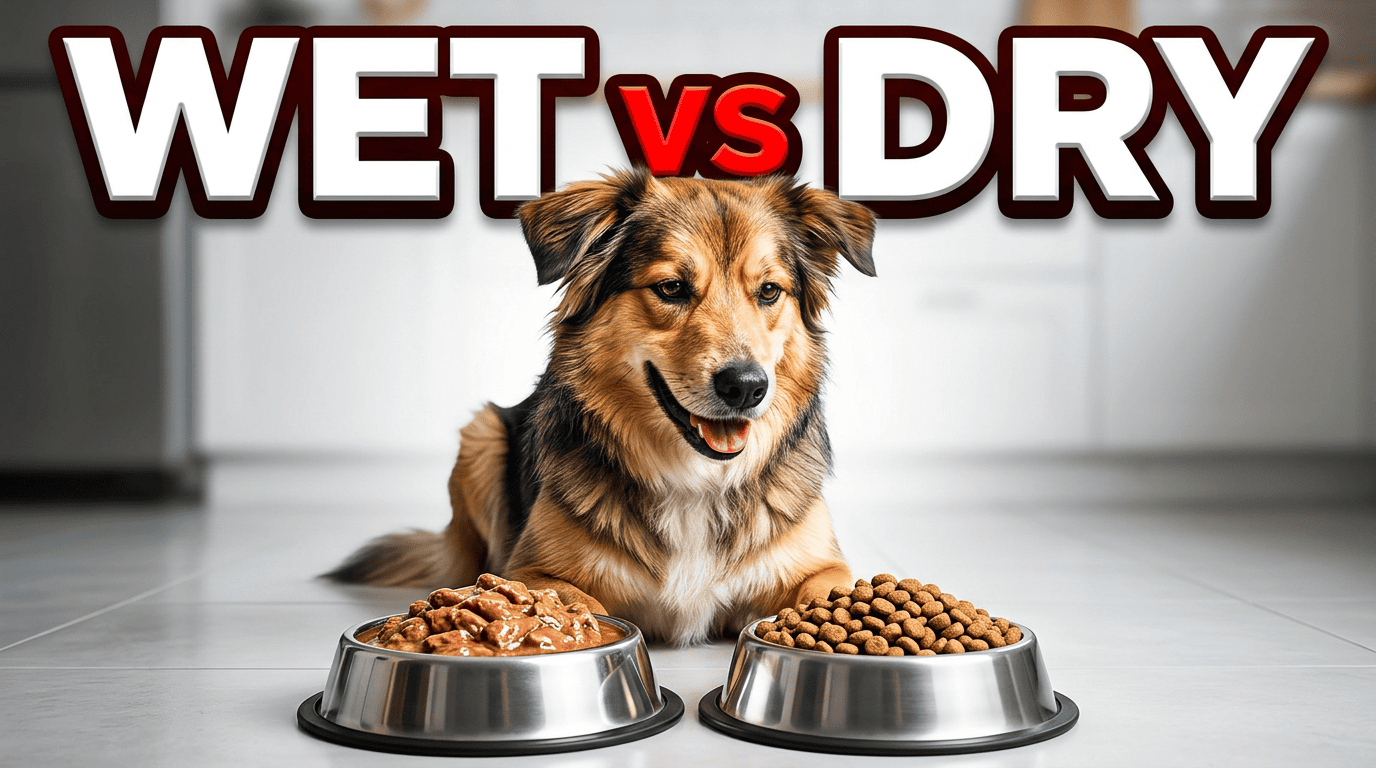
Wet or dry is one of the questions dog owners ask most, and it rarely has a one-word answer. Both can be complete and balanced, so the better choice comes down to your dog and your household.
Whole Dog Journal executive editor Kate O’Connor put the question to companion animal nutritionist Dr. Mary Cope, PhD, who lays out where each type of food wins and how to choose.
The short answer
For dogs, Dr. Cope says there’s no automatic winner. Both can provide complete and balanced nutrition for all life stages. The right pick depends on your dog’s health and preferences, your lifestyle and storage, and your budget and feeding goals.
Where dry food wins
Dry food is convenient, economical, easy to store, and keeps a long shelf life even after opening, which also makes it easy to portion. There tend to be more options for different lifestyles and health needs, and “dry” now includes air-dried and freeze-dried, not just kibble. The trade-offs: it’s low in moisture, so your dog needs to drink more, and because kibble needs some carbohydrate to extrude properly, a very high-meat formula usually means freeze-dried rather than kibble. Dry food can also be less palatable for picky eaters.
Where wet food wins
Canned food is mostly water, which helps dogs who don’t drink much, seniors with kidney concerns, and dogs recovering from dental work or missing teeth, since it needs no chewing. It’s also very palatable and smelly, which picky eaters love. The downsides are a higher cost per calorie (you’re paying to ship water in heavy packaging), a short shelf life once opened, and less convenience for leaving food out or traveling.
When to choose one over the other
Dr. Cope leans toward wet food when a dog needs extra hydration or has a poor appetite or bad teeth, and toward dry food for budget, convenience, and calorie control (she sees more low-calorie options on the dry side). For a picky dog on a budget, her middle ground is dry food with a dollop of canned and a little water stirred into a soup over the kibble.
The nutritional differences
Canned formulas tend to be more meat-heavy and lower in carbohydrate, while kibble needs some carbohydrate to hold together. The biggest difference is moisture. You can add water to dry food to close that gap, but once you do, the shelf stability disappears and the food needs to be eaten promptly or thrown out.
What to check before you buy
Whichever you choose, start with the statement of nutritional adequacy. Dr. Cope notes that most kibble is complete and balanced, but some canned, air-dried, and freeze-dried products are toppers meant for intermittent feeding, not full meals, so read the label. She also looks for a reputable manufacturer, a quality ingredient list led by animal proteins, and, above all, whether the dog actually does well on the food.
The takeaway
There’s no single best format, only the one that fits your dog and your routine. Watch the full interview above for Dr. Cope’s full breakdown, and talk with your own veterinarian about your dog’s specific needs.